If you’re planning to live on site during a renovation, choosing a static caravan for self-build accommodation isn’t just about finding enough beds and a working kitchen. When you’re going to live in it for months, details that affect warmth, layout, ventilation, and everyday practicality start to matter much more.
In this guide, we look at the static caravan specifications that can make the biggest difference during a self-build project, from heating and insulation to layout and ventilation, as well as practical considerations such as siting and services. The right specification depends on your building project, the time of year, how many people will be staying in the caravan, and how much space you have available on site.
At N. Doe Caravans, we supply self-builders with temporary accommodation for construction and renovation projects. Browse our self-build static caravan hire range or call 01403 274877 to talk through your project and arrange a viewing.
If you’re still deciding whether a caravan is the right form of self-build accommodation, read our guide to the benefits of static caravans for self-build projects.
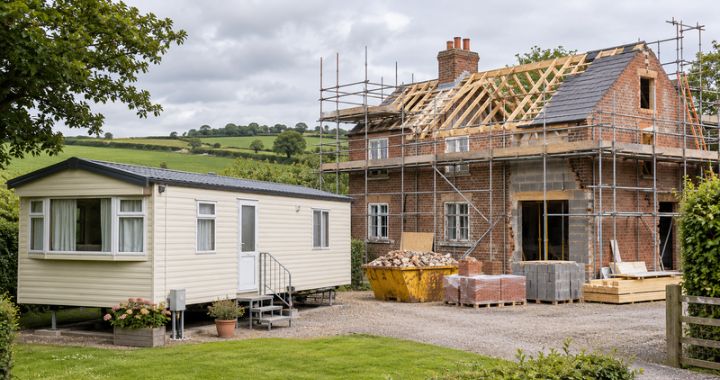
Important caravan specification considerations for self-build projects
For a self-build project, the most useful specifications affect comfort, practicality and how well the caravan works on your site over several months.
Key areas to compare include insulation and glazing, heating, ventilation, layout, size and siting requirements.
Which insulation and glazing features should you prioritise for a winter build?
If your project runs through autumn or winter, double glazing can matter more than it would for a short summer stay. Better insulation and glazing can reduce heat loss and make the caravan easier to keep comfortable as temperatures fall.
N. Doe Caravans’ current self-build hire range includes both single- and double-glazed models, so check the specification of individual units. It’s also worth considering draught-proofing and the caravan’s overall insulation if you will be living there through colder months.
For more practical advice, see our guide on how to keep your static caravan warm in winter.
Which heating system suits your site and project?
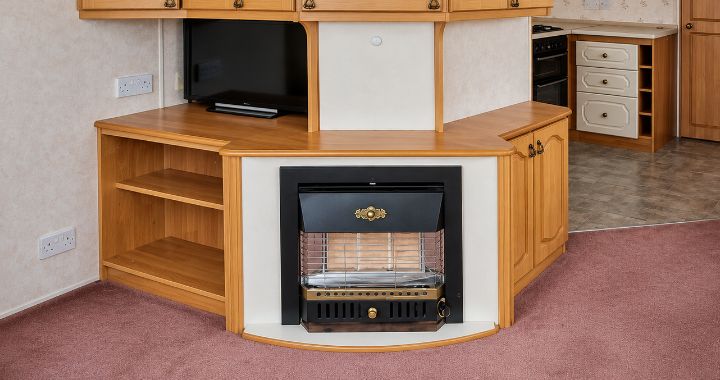
The heating specification is an important consideration when choosing a static caravan for a self-build project, particularly if you expect to be living on site through colder months. Our range includes all-electric models, electric heating, gas fires and central heating on some caravans, so the right option will depend partly on the utilities already in place for your build.
An all-electric caravan can be a practical choice where there is a suitable electrical supply, while a gas-heated model may suit a project where gas is already used on site or can be arranged. Running costs will vary depending on the type of supply, caravan, weather, energy prices and how often the heating is used, so focus on choosing a system that suits your site set-up, expected use and budget.
If you’re unsure which specification is most suitable, N. Doe Caravans can help you compare.
What features help manage ventilation and condensation?
If you’re choosing a caravan for long-term temporary accommodation while building, look at how well the specification manages heat and airflow. Good insulation and double glazing can help reduce colder surfaces where condensation is more likely to form, while effective ventilation helps moist air escape.
Useful features to look for include fixed air vents or roof vents, opening windows and extractor fans in moisture-heavy areas such as the kitchen and bathroom. These are particularly important when several people are cooking, showering and drying clothes inside the caravan over a long stay.
Even with the right specification, everyday ventilation still matters. Keep vents clear, use extractor fans where fitted and open windows when practical to prevent excess moisture building up.
Read our guide on how to control condensation in static caravans for more advice.
How much space and how many bedrooms do you need?
If you’re living in a caravan for several months, the layout needs to work for everyday life.
Consider:
- How many people will be staying in the caravan
- How many bedrooms you need
- The amount of storage and living space required
- Whether you need space to work or manage the build
- How much room is available alongside the construction
A larger caravan may provide more living space, but it also needs to fit comfortably alongside the build without restricting access for builders, contractors, equipment or deliveries. That means considering both the internal layout and the overall length and width of the caravan before choosing a model.
Our guide to choosing the right size static caravan explains the measurements to consider.
Can the caravan be delivered, sited and connected safely?
Before committing to a self-build static caravan, make sure it can reach the position you have planned. Check gate widths, trees, buildings, bends, overhead obstructions, turning space and ground conditions along the delivery route.
The caravan will also need a suitable base and should be properly levelled and supported. If the ground isn’t ready, our groundworks for static caravans service can prepare a base for single or twin units, as well as clearing and levelling the site. Once the base is in place, our siting and transport service includes levelling the unit, after which the required services can be connected.
Plan for access to:
- Electricity
- Fresh water
- Drainage
- Any required gas supply
We can install septic tanks and cesspools as part of our groundworks, but electricity, gas and fresh water connections will need to be arranged separately.
Remember that the caravan will need to be removed when the project is complete, so make sure construction, landscaping or stored materials do not block the route as work progresses.
You should also check whether planning permission or other approval is required. Requirements vary according to the site and how the caravan will be used, so speak to your local council and read our guide to static caravan laws on private land.
Hire or buy a static caravan for self-build accommodation?
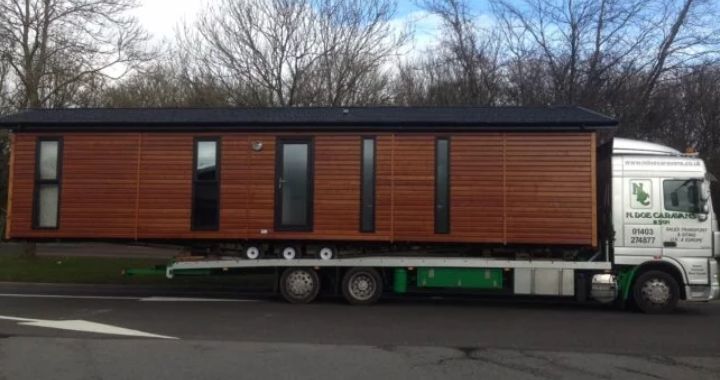
For projects lasting several months, static caravan hire can keep things straightforward. We offer flexible short and long-term lease options, and customers can arrange collection when they no longer need the caravan. Hire can therefore work particularly well where the build timetable is uncertain, or you don’t want to deal with selling the caravan afterwards.
If your build is likely to run substantially longer, it may be worth comparing the cost of buying a used caravan with the total hire cost. Purchasing can also give you more control over the specification and may make sense if you plan to keep the caravan once the construction work is complete. If so, you may also consider buying from a range of new static caravans.
Summary: choose the specification around your self-build project
The right caravan for self-build accommodation suits both your site and how you expect to live during construction.
For a winter or longer-term project, double glazing, suitable heating and good ventilation may become more important, while families may need additional bedrooms, storage and living space. At the same time, the caravan still needs to fit comfortably alongside the build, with enough access for builders, equipment and deliveries.
Before choosing a model, think about which specifications best suit how you will use the caravan and the conditions on your site, and whether static caravan hire or buying makes more sense for your likely timescale and budget.
Getting these practical details right at the start can make your temporary accommodation work much better for day-to-day life while the build progresses. It can also lead to reduced accommodation costs compared with hotels or renting a house or flat nearby, while still giving you the space, facilities and everyday comforts you need on site.
Find static caravans for hire with N. Doe Caravans
At N. Doe Caravans, we have decades of experience supplying and siting static caravans, with a range of units available for self-build projects and renovation work from our showground in Horsham, West Sussex.
Browse our self-build static caravan hire range or call 01403 274877 to discuss your project, the specifications that best suit your needs, and to book viewings of suitable models.
Frequently asked questions
What specification should I look for in a static caravan for a self-build project?
Focus on features that affect everyday living, including double glazing, heating, bedroom space, storage, ventilation, and the overall size of the caravan. The right specification depends on the season, number of occupants, available services, and how long you expect the build to take.
Can I live in a static caravan on site during a self-build?
It may be possible, but planning and land-use requirements vary by location and circumstances. Always check with your local council before arranging delivery and review the relevant rules for static caravans on private land.
Is it better to hire or buy a static caravan for a self-build?
Hiring can be practical for shorter or uncertain project timescales because the caravan can be collected when you’re finished. For longer projects, buying may become more cost-effective, so compare the likely overall costs and think realistically about how long your construction work may take.